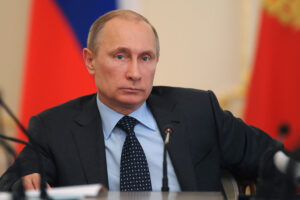
The Situation in Ukraine
Tensions between Ukraine and Russia have reached a new peak in recent weeks. Hundreds of thousands of Russian troops have amassed on the Ukraine-Russia border, and a military confrontation is seeming more and more plausible as the days go by.
Russia has become increasingly aggressive in it’s actions and rhetoric towards both Ukraine and NATO, culminating in a long list of untenable demands made by the authoritarian state, released recently. The demands that Russia has made of NATO and the US are, to put it mildly, quite impossible.
Russia has demanded that the US not maintain military presence in any of the former Soviet states, prevent NATO expansion eastwards, and that the US not deploy any military installations outside their territory from which they could attack Russia, each requiring a complete restructuring of American defence policy.
In addition, Russia has demanded that NATO not deploy missiles in range of Russia, that NATO refrain from any further enlargement including Ukraine, and that NATO forces cannot conduct any military activity in Eastern Europe, the South Caucasus or Central Asia. The US and NATO have yet to make formal responses, with talks between the US and Russia being held in Geneva today, with NATO and Russia tomorrow and the 12th in Brussels, and with the OSCE (Organisation for Security and Co-operation in Europe) and Russia on the 13th in Vienna.
It is unclear at this point whether these demands are simply a maximalist negotiating position, from which Putin expects to be dissuaded, or a pretext for invasion when the US and NATO inevitably refuse them.
“Novo Russia”
Putin has been seeking to claim more and more Ukrainian territory, in a greater strategy he has termed “Novo Russia”, or “New Russia.”
This was the reasoning for his annexation of Crimea in 2014, and his recent efforts in eastern Ukraine are surely an extension of this dangerous ambition. There is now a serious concern that Russia will mount a full-scale invasion of Ukrainian territory. The international community has overwhelmingly voiced its opposition to Russia’s aggressive actions towards Ukraine and NATO, some with general calls for a de-escalation of tensions, others with defiance and promises of military retaliation if the situation is made even more serious by Russia.
The Presidents of Poland and Lithuania (both NATO member states) met with Ukrainian President Zelensky on the 20th of December last year to discuss security in the region, sending a clear message to NATO; do more to counter Russia, or peace in the region will be at stake. These three nations have pledged to collaborate on shared security matters, and have demanded that Russia take a step back and de-escalate at once.
The US has also responded strongly to this matter, with Secretary of State Blinken promising “massive consequences” if Russia takes further military action, in an interview with ABC News. He made it clear that the ball is in Russia’s court, and it is up to them whether they wish to de-escalate, engage in constructive talks, and work out a peaceful solution, or continue to increase tensions, and face the consequences promised by the US and its allies, both economic and military.
Why NATO Can’t Break Now
In all honesty, a Russian invasion of Ukraine is now very likely. Russia is essentially using Ukraine as a hostage to make its ridiculous demands, hoping that NATO will want to maintain peace at all costs, and take a submissive stance at the negotiating table.
Their demands include removal of NATO presence from several NATO member states, and a refusal to let Ukraine, a sovereign and independent nation, the right to determine its own security future. Russia wants all NATO military presence anywhere near its territory gone. Russia is a vast nation, stretching from Eastern Europe to the Asia-Pacific, making the removal of NATO military presence near its territory an impossible endeavour.
NATO and US acceptance of these demands would incur serious damage to NATO’s reputation, and put NATO-Russian relations back to the 1980s. As such, NATO cannot cave to Russian pressure, no matter the consequences of non-conformity.
Russia, more specifically Putin, has deliberately escalated tensions in Eastern Europe in order to gain territory, and win support back home in the face of growing political resistance, and a weak economy due to the Coronavirus pandemic. The most important course of action those opposed to Putin must now take is to de-escalate the situation, and endeavour to reach a compromise with him.
Putin’s Soviet Fantasies
In accordance with his “Novo Russia” policy, Putin wishes to control Ukraine as he controls Belarus. It is well known that he pines for the days of the Soviet Union and the massive sphere of influence enjoyed by the Kremlin in the 20th century, and views the collapse of the USSR as the greatest political tragedy of the era.
He sees growing US weakness after four disastrous years of foreign policy under President Trump, and also the poor handling of troop withdrawal from Afghanistan under President Biden, as his opportunity to pursue his goals. His hope is that the US and NATO, fearful of a protracted conflict with Russia, will pressure Ukraine into accepting more Russian oversight.
He is not scared of the US, or of Biden, and doesn’t believe the new President will commit to military intervention in Eastern Europe. His goal is to weaken NATO by removing NATO troops from all of the former Soviet satellite states in the region, and re-establish Russian dominance, bringing the iron curtain crashing down upon Europe once more.
What Needs To Be Done
NATO and its allies need to be meticulous in how they counter Russia’s expansionist policies. The diplomatic response must lay out clearly that an invasion of Ukraine will be disastrous for Russia, for its economy and its credibility.
Concessions for Russian interests should be made conservatively, securing rights for Russian speakers in eastern Ukraine, and curbing certain NATO responsibilities in the region, but only with Russian compliance with NATO and a de-escalation of tensions.
If Russia refuses to back down after the series of talks scheduled for this week, military aid to Ukraine must be increased, economic sanctions on Russia must be imposed immediately, and NATO presence in Poland and the Baltic states should be increased forthwith.
President Biden must send a clear message to Putin; that Ukraine is not his, and he has no right to it; that his demands are untenable and ridiculous; and that NATO was founded precisely to curb Soviet aggression of the type we are seeing from Russia now, and that it will continue to do so.
Putin cannot be allowed to jeopardise peace in Eastern Europe and ride roughshod over international law, and NATO must assert itself in the face of the threat posed by an increasingly aggressive Russia.
stay safe
/e