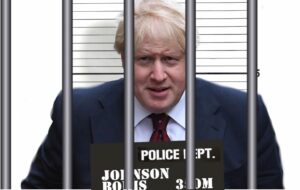
The PM’s Situation
The Partygate saga has once again reached national headlines, spelling another tidal wave of scathing criticism against the Prime Minister Boris Johnson and his government.
The Met Police investigation into multiple alleged breaches of lockdown laws in Whitehall and Downing Street during the height of the pandemic has borne fruit. The Met have so far issued fifty Fixed Penalty Notices (FPNs) to those who attended the gatherings, including the Prime Minister and the Chancellor Rishi Sunak.
Downing Street has released a statement confirming that the Prime Minister has paid the fine, as has the Chancellor. Both have expressed their intention to stay in their roles and neither will resign over this matter.
Opposition leaders and MPs have been unanimous in their calls for the two men to resign. Labour leader Sir Kier Starmer was one of the first to express his views on the matter, accusing Johnson and Sunak of repeatedly lying to the British people, saying, “they have to go.”
The opposition are not the only people calling for the PM and Chancellor to resign; a growing number of Conservative MPs have added their voices to the call. The most recent is Nigel Mills, MP for Amber Valley, who in an interview on the 13th of April called the PM’s position “untenable.”
However, the mood on the Tory benches overall is not one of rebellion at this stage. Despite the PM being fined by the police, the ongoing situation in Ukraine has galvanised backbench support for his leadership, with most saying that a leadership contest would not be in the national interest with war in Europe ongoing.
Junior Justice Minister Lord David Wolfson has resigned over the PM and Chancellor’s handling of this scandal, saying that after the “repeated rule-breaking and breach of the criminal law in Downing Street”, he had “no other choice” but to go. His resignation is expected to be the first of many in response to this new development.
It almost goes without saying that a great majority of the British public is outraged by this news. According to the most recent YouGov polls, around seventy-three percent of those polled think Johnson should resign over this matter. Labour has again widened the distance between themselves and the Conservatives, leading the polls by six points.
A word cloud of all of the most common words used to describe Johnson was released following these polls. The most-used word is ‘liar’, followed closely by ‘idiot’, ‘untrustworthy’, and ‘incompetent’. The public’s perception of the Prime Minister has clearly worsened as a result of this new development.
A Criminal in Office
Boris Johnson is now the only Prime Minister in British history to be found guilty of committing a crime while in office. The same is true of Rishi Sunak, now the first Chancellor to be punished for breaking the law while in the job.
It almost goes without saying that these are two utterly shameful records to be broken, but with this Prime Minister and this government, obvious things need to be explained in great detail.
Johnson’s favourite excuse for his conduct is that he was unaware that he was breaking any rules whilst he was breaking them, so the need to spell out exactly when and how he broke the rules (that he wrote, and explained to the British people on an almost daily basis during the pandemic) is unfortunately and shamefully now a vital tool in bringing him and his government to justice.
He has also failed to take any true responsibility for his crime. In the first statement he gave after receiving his fine, after apologising, he said he “fully respected” the conclusion that the Met Police had reached, but did not say that he agreed with it, and never has.
The issue here is that he has repeatedly and routinely cast doubt over the Met’s findings with language such as this.
His tactic here is simple; reduce the amount of unfavourable sound bites during this precarious period by avoiding direct language, draw the public’s attention towards the war in Ukraine, and as ever, wait out the storm.
This is his usual gambit, as has been dissected on this blog many times before. It worked with the Owen Paterson situation, with the Jennifer Arcuri scandal, it worked when the Tory party was accused of selling seats in the House of Lords to its treasurers, and it is Johnson’s hope that it will work this time as well.
However, this scandal is surely the greatest test Johnson and his government will face. Local elections are upcoming in May, in which the Conservatives are projected to take heavy losses following the parade of sleaze and scandal they have subjected the country to for the past year.
The PM is also expected to receive more fines for more law-breaking parties he attended during lockdown, and these will probably be far less easy to explain than his nine-minute ‘cake ambush’ he has already been fined for.
We also have the full, un-redacted Sue Grey report to look forwards to, due to be released after the Met enquiry has concluded. The full report will include details of each and every gathering that took place in Downing Street during lockdown, drawing from reports of eyewitnesses and attendees. It is predicted to be the largest bombshell of this saga, predicted to cause more damage to Johnson’s leadership than all other developments so far.
Loopholes
It is now clearer than ever that Johnson will never resign his office. Being found guilty of breaking one of your own laws would be enough to destroy anyone else’s political career, but not Johnson. He has so corrupted and manipulated the office of Prime Minister that the Ministerial Code has become practically defunct.
“Ministers who knowingly mislead Parliament will be expected to offer their resignation to the Prime Minister” somewhat loses its sting when the Minister in question is the Prime.
This clause was written because the Prime Minister is expected to be a paragon of lawfulness and honesty whom Ministers are meant to emulate. When the Prime Minister is the least lawful and least honest member of the current government, the Ministerial Code becomes null and void.
When the standards the PM holds himself to are so low that he allows members of his government to get away with bullying, lies, corruption, and lawbreaking, a serious, precedent-setting line has been crossed. The danger posed by Johnson and his cronies to the functionality of British government is far greater than many realise.
There is no codified constitution in the UK, and as such, a good deal of British politics is conducted on the basis of convention; precedents set by former Ministers and MPs that are followed as law, despite nothing official being written.
This dependence on conventions has allowed Johnson to downplay and minimise each of his resignation-worthy offences to mere triviality. He does not need to resign; there is no written law in the United Kingdom that says he must, so he never will.
The only way that he can be removed from office without a General Election is through a vote of no confidence in his leadership from his own party. A party that, under his leadership, enjoys an eighty seat majority in the Commons, and until these past few months has not had any major scandal or upset.
A cosier position could not be created for Tory MPs. Apart from a radical few who believe in decency and honesty in public office, their one and only concern is whether or not Johnson can perform in a General Election.
If this scandal (which is already the most pathetic and shameful political saga I have witnessed since I started paying attention) escalates into something that, in the eyes of Tory MPs, will damage their chances in an election, they will get rid of him. And escalate it will.
The Final Nail
The coming weeks and months will decide Boris Johnson’s future as Prime Minister. If a General Election was to be held today, recent polling predicts that the Tories would lose. His response to the war in Ukraine may have brightened his reputation internationally, but at home, he is close to his most unpopular.
He now uses Ukraine as a crutch to prop up his increasingly untenable leadership, using the UK’s support of the nation to distract from his ongoing personal turmoil.
During his address to the House of Commons after he was issued with his fine, the majority of his speech was focused on Ukraine, presumably to draw his MPs attention away from his crime and towards the only area in which he has a generally positive public perception.
Of course, opposition members were not fooled by his distractions, and neither are the British public, whose anger with the PM is reaching a fever pitch.
Those who supported him in the last General Election are starting to see through Johnson’s veneer of buffoonery. With each development of this pitiful story, he loses more and more public support.
This most recent development has also reignited the ongoing problem of Johnson’s successor, with Rishi Sunak now firmly out of the running following the issuance of his fine, and the myriad complications surrounding his taxes, his wife’s non-domicile status, and his own Visa. Once seen as the PM’s natural successor, he is now solidly in the bottom half of the list of contenders, and is not expected to be any real threat if a leadership contest was to be called. We can add Rishi Sunak’s career to the long list of things that Boris Johnson has broken.
The upcoming local elections are predicted to be disastrous for the Conservatives, who stand to lose more than half of the local councils up for election. This is despite the fact that Labour is defending the most councils this election.
Tory MPs seem to be missing the crucial issue for them and their party; as the PM loses favour, so too does the Conservative Party, and indeed Parliament as a whole.
If Conservative MPs care about their own political longevity, let alone the welfare of their constituents, they will do the right and decent thing; get rid of Johnson as quickly as possible.
stay safe
/e