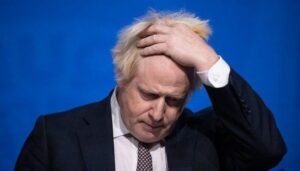
The Situation in the Conservative Party
Prime Minister Boris Johnson and the Conservative Party have a had a rough few weeks recently, to put it gently. As scandal after disreputable scandal makes headlines across the nation, any chance the Tories had of appearing sleaze-free in the mind of the public is steadfastly fading.
The heady highs of popularity the Government experienced in the summer have been dashed, with the latest peerage scandal, shortages in petrol and energy, national insurance controversies, and the U-turn in policy relating to the Owen Paterson scandal (the details of which were discussed on this blog when the story broke) led to Labour overtaking the Tories in the polls by as much as 6% in late November.
However, the Conservatives are overall less popular than their leader, who still consistently polls higher than his party, in most part due to his charisma. That being said, Johnson is currently at his most unpopular, polling at around 29% approval. The Prime Minister has been the victim of some very unfavourable optics recently, delivering a peculiar, rambling speech to the CBI on the 22nd, laced with toe-curling pauses, onomatopoeia and Peppa Pig references. This, on top of a renewed threat of a criminal investigation against Johnson, as well as a higher-than-average amount of scandals in the Tory ranks which will undoubtably be linked to him as leader, may signal the first death knell for his leadership of his party and his nation.
The Arcuri Scandal
In 2012, during his tenure as Mayor of London, Boris Johnson had an affair with an American businesswoman called Jennifer Arcuri. The details of the affair are as seedy and unscrupulous as one might imagine; Johnson offered to help Arcuri launch her tech business, speaking on her behalf to interested parties, using his influence as Mayor of London to help, in his words, “be the thrust – the throttle – the mere footstep” to launch Arcuri’s career.
After Johnson lobbied on her behalf, they had sex on numerous occasions before Arcuri returned to the US. An investigation into this matter was launched in 2012, but was abandoned due to the lack of access to Arcuri’s personal diary, as well as the deletion of some key emails and records. Arcuri has recently agreed to cooperate with the Greater London Authority on this matter, agreeing to be questioned, and making the relevant diary entries available to the GLA’s officers, in which conversations between her and Johnson are transcribed verbatim.
After the diary entries were made public, the Deputy Leader of the Labour Party, Angela Rayner MP urged the Independent Office for Police Conduct to “look again” at if a criminal investigation is needed. Johnson has, predictably, insisted that he acted in full propriety whilst exchanging political favours for sex.
The possibility of Johnson facing yet another investigation into abuse of his public office should, for many people, set the record straight on whether he is good leadership material or not.
New Leadership Prospects?
There is currently speculation that certain Tory MPs have submitted letters to the 1922 committee (the Parliamentary committee representing Conservative backbenchers). Whilst these are only rumours, these rumours would not exist if the Conservative Party was entirely satisfied with its leadership.
Of the post-war Prime Ministers, a third of them have been ousted by their own party whilst down in the polls. There are two methods for achieving this; the first, ‘informal’ method, is done by simply applying political pressure to the PM when confidence is failing. This is how Theresa May lost her leadership to Johnson, after her Brexit deal was rejected three times in the Commons. This is unlikely for Johnson, as he is still easily passing legislation, mostly due to the large majority enjoyed by the Conservatives. The second, ‘formal’ method, is by a vote of no confidence. This process starts when backbench Tories send letters to the 1922 committee, signalling their discontent with the current leadership. If 15% of Tory MPs send letters (55 members with the Conservative’s current majority), a vote of no confidence is triggered. All Conservative members can vote, and if 50% or more vote against Johnson, he is obliged to stand down, and cannot run in any future leadership elections. This is currently also unlikely, but as the wave of sleaze and scandal grows larger, there is no telling how many disgruntled Tory MPs will voice their dissatisfaction to the 1922 committee.
If a vote of no confidence isn’t called, which is the more likely outcome, Johnson will have little to worry about until 2024, when the next General Election is scheduled. Parliament can call an early election by a simple majority (which is how May called her snap election in 2017), but this is also unlikely. Johnson and the Tories are down bad in the polls, so the point of a snap election is non-existent. Also, May was ahead by 20 points in the polls when she called an early election, but ended up losing seats anyway.
Corruption Rising
The question posed by this article is a simple one; when does sleaze and scandal, such as we have seen from the Tories recently, and will no doubt see more of in the coming months, evolve into blatant corruption? There is evidence that is already has.
The root of the Paterson scandal was the issue of second jobs held by MPs, but it is debated as if both sides of the house share the blame equally. This is not to say there aren’t bad eggs on the opposition side, but according to the UK Parliament’s Register of Member’s Financial Interests, Conservative MPs are 90% more likely to have paid advocacy positions, akin to that of Owen Paterson, than other parties.
Referenced in the opening paragraph was “the latest peerage scandal”; Conservative Party Treasurer is now officially the most ennobled job in the UK, with all 15 (excluding the most recent) Tory treasurers in the past 20 years offered a seat in the House of Lords. The Conservative Party claims these men were offered their peerages for their philanthropy and business expertise, but each of them has donated £3 million or more to the party during their time as treasurer. Each of them now sit in the upper house of the British legislature, having effectively bought their way into the law-making profession. It is a well-known secret in the party that, in the words of one donor, “you give your three million quid, and you get your peerage”.
The idea that lawmakers can dictate how British citizens live their lives by merely having a lot of money is, in itself, archaic and morally corrupt. Any smart legislators would have nipped this problem in the bud years ago before it evolved into a damaging scandal. Now, the best course of action for damage limitation is to remove the peerages from Tory treasurers in contrition, and refrain from flogging peerages to the highest bidder in the future.
The Tories’ Course of Action
It is clear that Johnson does not only not care about anti-corruption laws, but he also seems to think he is above them. Indeed, he has frequently gotten away with breaches of conduct, and his skill at deflecting criticism has meant that sleaze has never brought him down before, despite numerous occurrences of such.
The vaccine rollout and the UK’s better-than-average handling of the Covid-19 pandemic has given Johnson and the Conservatives a buffer against scandal, but signs of that buffer wearing away are becoming more conspicuous. Johnson is a brilliant campaigner, but a terrible politician, and an even worse leader. Several high-ranking Tories, including unnamed members of his cabinet have said as much; that he simply doesn’t have the skills needed to run the country effectively.
It is safe to say that morale amongst Conservative MPs is low, as is confidence in their leader. Johnson’s talent as a campaigner is the only thing Tories are loyal to him for, to help them keep their jobs come election year.
Now, the Conservatives need to think strategically; keep Johnson as their leader, guaranteed to campaign successfully in 2024, but risk more scandal and a potential criminal investigation which could seriously damage election chances for the entire party, or kick him out, elect a new leader from their ranks (probably Rishi Sunak), reduce chances of further controversy, but take a gamble come 2024. If Johnson is smart, he’ll avoid any more scandal, keep his nose clean and play to his backbenchers, or like Thatcher and May before him, let them pressure him out of his job.
stay safe
/e