The Situation in Israel
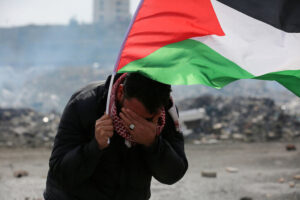
The Isreal-Palestine conflict has once again reached international headlines, after violence broke out in the region on the 10th of May. Tensions were already high, following civil unrest in the preceding days. Several separate events are thought to have led to the violence, the first on the 13th of April, when Israeli police entered the Al-Aqsa Mosque, the third-holiest site in Islam, and sabotaged the loudspeaker used for the call to prayer. This was done so that the Israeli President Reuven Rivlin would not be interrupted as he gave a Memorial Day speech at the Western Wall nearby. This incedent drew widespread criticism from Muslims in Israel and Palestine, and was the first in a string of tit-for-tat incedents that have recently escalated tensions in the region. These smaller incedents culminated in rockets being fired on the 23rd of April by extremist groups in Gaza at targets in southern Israel, prompting a response from the IDF, who fired missiles at Hamas targets on the Strip shortly afterwards. Concurrently, Israeli police clashed with protesters in East Jerusalem over the eviction of Palestinian families in the Sheikh Jarrah neigbourhood of the city. During these protests, tensions peaked after stones were thrown at police forces, who then used stun grenades, rubber bullets, and tear gas to storm the Temple Mount complex and Al-Aqsa Mosque. This drew international attention, with governments and international organisations across the world giving comments and expressing concern in various capacities. These ranged from complete support for Israel to protect itself from terrorism, to condemnation of Israel’s actions against innocent Palestinian civilians, to calls for a general de-escalation of tensions and criticism towards both sides. Following Israel rejecting an ultimatum posed by Hamas to withdraw troops from Al-Aqsa and Sheikh Jarrah, Hamas launched a series of rockets towards Israel, destroying a handful of residences and damaging a school. Israel has responded by conducting some 950 airstrikes on the Gaza Strip between 10-16th of May, destroying nearly 500 buildings and killing 256 Palestinians, including 66 children. About 4,600 rockets were fired from Gaza towards Israel, but over 90% of these were intercepted by Israel’s Iron Dome defence system. 12 Israeli citizens have died as a result of these rocket attacks. A ceasefire was proposed by Hamas on the 1th of May, but Israeli Prime Minister Benjamin Netanyahu has refused the offer.
Caution: Handle with Care
The situation in Israel-Palestine is always at the height of modern political complexity, and always warrants measured response as to not exacerbate existing tensions. However, recent history has shown us that whenever an apparant solution presents itself, another layer of complexity unfolds to counter the peace process. Whenever a period of relative stabilty presents itself, it is always undermined by an escalation of small incedents that turn into larger-scale conflicts. In recent years, the Israeli government has become more and more heavy-handed in its treatment of Palestinians, which has done more to undermine peace in the region than it has to heal it.
Trump-Netanyahu Relations
A likely cause of Israel’s recent emboldenment is the amount of recognition that it is has been given for its more nationalist decisions, especially from the United States. Prime Minister Netanyahu enjoyed a close relationship with former US President Donald Trump, which he used to boost his popularity with his electorate after Trump’s election. Trump and Netanyahu are both nationalists, and due to their closeness in both policy opinion and friendship, the Trump administration gave a great deal of support to Netanyahu’s government under his right-wing Likud party; Jerusalem was recognised as Israel’s capital by the US, as was Israeli sovereignty over the occupied Syrian territory of Golan Heights. The two leader’s closeness also led to the signing of landmark deals between Israel and the UAE and Bahrain, normalising relations between Israel and the two Arab Gulf states, the causes and implications of which have been discussed in a previous article on this blog when they were signed in August of 2020. The approval that Netanyahu’s Israel has received from their most powerful ally has most likely contributed to the regime’s harsher treatment of Palestinians, and the rapidly increasing number of Israeli settlers in Palestinian occupied territory. It may have also contributed to the more overt and aggressive tactics employed when dealing with protest or resistance to forced evictions. This is evidenced in the Israeli police’s responses to protesters in April; responding to thrown stones with rubber bullets and tear gas. The first more combative event in the recent chain that has led to the current conflict was perpetrated by Israeli police, sabotaging the speaker system at Al-Aqsa Mosque, but of course, the real initial event could still remain unknown, and could have been instigated by either side.
Israel’s Heavy Hand
The asymmetrical nature of the current conflict is also reflected in the number of casualties encurred by either side; only 12 for Israel, but over 250 for Palestine. Israel launced 950 airstrikes on the Gaza Strip, but Hamas launched over 4,600 rockets at Israel. However, while Hamas may have launched more attacks on Israel, the vast majority were intecepted by Iron Dome, and the type of rockets used by Hamas are easier to fire, are cheaper, and do less damage than conducting an airstrike. The unwillingness to negotiate, or even to respond to ultimatums posed by Hamas and other leading Palestinian groups that are sure to end in conflict and loss of life show that Israel has little regard for the lives of Palestinians. Hamas, PIJ, and other Palestinian Islamist groups may be extreme, and the policy opinions and views of those in these groups may be, by the majority of civilised opinion, barbaric, but they represent the people of Gaza as the de facto governing authority of the Strip. However complicated it may be to negotiate productively with them, Israel must attempt to re-establish peace.
A Step Towards Peace
Gaza is effectively governed by as extreme a group as Hamas because the situation experienced by the residents of Gaza is an extreme one. Overcrowding, shortages of water, power and medicine (all made worse by the Covid-19 pandemic), and near-constant treat of attack by the IDF, makes Gaza nearly inhospitable. Extreme situations always drive the populace to an extreme solution, history has taught us this time and again. Hamas won an election in Gaza in 2006, and took de facto power in a war the following year. The situation brought about by Israeli occupation created an environment in which Hamas could take power, so perhaps if Israel tooks steps towards improving the situation in Gaza for the residents, they might experience some progress in the peace process. Unfortunately, such an optimistic policy direction is improbable while Netanyahu maintains power.
stay safe
/e