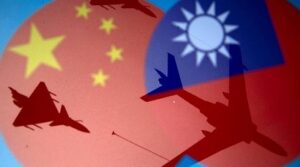
The Situation Across the Taiwan Straits
The relationship between The People’s Republic of China and the Republic of China (Taiwan) has never been positive, and is usually characterised by aggressive military posturing, and thinly veiled threats. So, when reports of Sino-Taiwanese relations falling to a 40 year low-point start emerging, you would be right to be concerned. The CCP has recently stepped up its tone when addressing issues surrounding Taiwan, with President Xi Jinping saying that the Chinese people have, “a glorious history of opposing separatism”, and that, “Reunification with Taiwan must be fulfilled.” President Xi also said that he would prefer a peaceful, diplomatic solution to this end, but has not ruled out the use of military force to achieve its goals. Indeed, the rhetoric used by China would suggest their government expects the situation to deteriorate into violence; the CCP released a statement saying, “China will take all steps needed and firmly smash any Taiwan independence plots.” On the 4th of October, China sent a record 150 aircraft into the Taiwanese air defence zone, marking the fourth straight day of PLA Air Force incursions into the Taiwanese ADZ. Taiwan’s defence minister believes that the PRC will be ready to launch a full-scale invasion of the island, estimated to need over a million troops to complete, by 2025. While the obvious immediate ramifications for Taiwan in this scenario are dire, this conflict will have the potential to spark an even larger conflict if the United States decides to intervene on Taiwan’s behalf, despite its intentional strategic ambiguity regarding Taiwan. The US’s fence-sitting has been useful in maintaining an uneasy peace across the Taiwan straits, but now that China is becoming more aggressive despite the possibility of US intervention, their strategic ambiguity is no longer a viable tactic.
A Military Escalation?
The prospect of invading Taiwan must have seemed unattractive to China, owing to the island’s mountainous terrain and naturally defended position. However, China has been steadily increasing its military spending over the last 20 years, and President Xi has only amplified this trend. Taiwan’s defence budget, although projected to increase, has stayed below 2% of their GDP for decades. Even with a significant boost to Taiwanese defence spending, China is already years ahead of Taiwan developmentally. This, coupled with an overwhelming majority of Taiwanese citizens identifying as ‘Taiwanese,’ and not ‘Chinese’, is likely to exacerbate the situation, and increase the probability of conflict on the island. And as Sino-US relations worsen, and US-Taiwan relations improve, the destructive capability of any potential conflict will increase.
Taiwan, not China
Taiwan, both its government and its people, do not want to be unified with mainland China. This is evidenced by the Taiwanese Democratic Progressive Party’s landslide victory in the most recent election. The DPP is solidly anti-China, seeing Taiwan as a sovereign nation, independent in all but its ambiguous legal status. Taiwan’s President, Tsai Ing-Wen, ran on a platform of resistance to Chinese aggression, resolved to safeguard Taiwan from annexation. The CCP have offered Taiwan a ‘one country, two systems’ system of government, similar to Hong Kong’s administration. However, Taiwan has rejected this offer, in part due to the treatment of Hong Kongers and their unwillingness to be treated similarly. The level of rights and freedoms enjoyed in Taiwan are significantly greater that those the Chinese citizens are subjected to, and unless Taiwan is able to maintain its current standard of living, China will never exercise full control over the island. The only way China will successfully and peacefully absorb Taiwan into itself is if the Taiwanese people choose to be unified, which is now more unlikely than ever. China has repeatedly warned other nations to stay out of its business surrounding Taiwan, calling it an internal matter. Whether the majority of the international community formally recognises Taiwan or not, it is a de facto independent nation, with its own laws, economy elections, government, trade networks, and, most importantly, a distinct culture and blossoming national identity. To be Taiwanese is starting to mean more and more to the people of Taiwan, and that sense of national unity only grows stronger the more aggressive China acts. People often band together in the face of looming danger, even the CCP put its civil war with the Kuomintang on hold for the duration of the Second Sino-Japanese War/Second World War.
The Best Way Forward
Still, the CCP attempt to coerce the international community into turning a blind eye to its unwanted advances upon Taiwan, all the while professing its commitment to human rights, equality, and perhaps most laughably, to democracy. Not only has Xi Jinping been quoted as saying democracy is an obstacle to China’s international goals, but the CCP has routinely harassed, imprisoned, tortured and massacred thousands upon thousands of its own citizens for merely desiring democracy. They cannot expect the international community not to voice its concerns when China actively abuses Chinese citizen’s human rights, and threatens to bring Taiwan under this same fold. If their attitude to human rights is not brought in line with the rest of the developed world, the largest destabilising force in China will, in all probability, come from within, as has been the fate of innumerable dynasties and empires before it. The people and sympathetic politicians will demand their rights, and without complete unity, autocratic systems crumble. The CCP can either continue to suppress their people and hope for the best, undoubtably enraging the international community further, or they can do what is best for their people; acquiesce, compromise, move forward, and let go of archaic notions of maintaining stability and governance through fear and violence. If the CCP is so sure it has the love of the Chines people, put it to the test and hold an election. They claim their actions are justified by the happiness of their citizens. Do they mean all Chinese citizens? Or just Han Chinese? Because I can imagine a Muslim Uyghur, or a Tibetan Buddhist, or a Hong Kong democrat being less than satisfied with CCP governance.
stay safe
/e